Thursday, June 3, 2021

Palos Verdes Public Library (aka Malaga Cove Branch) Opened in 1930

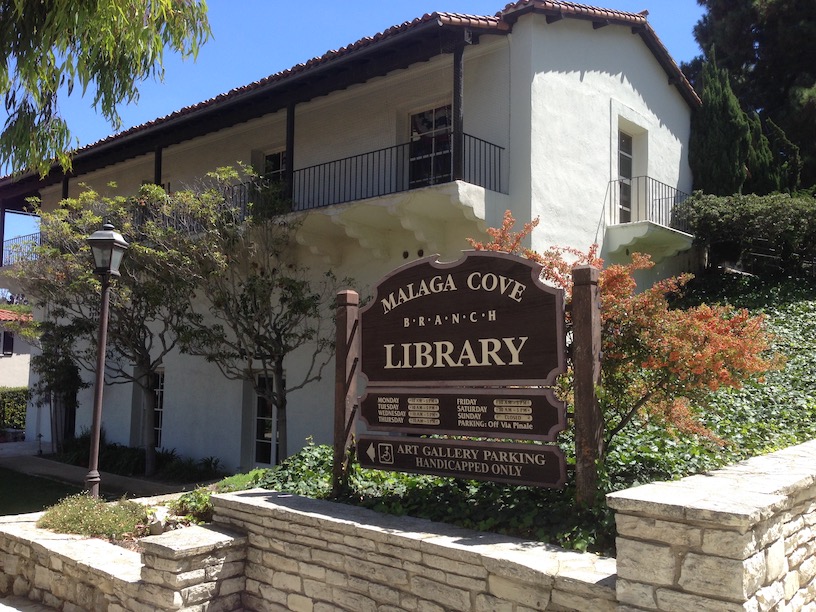
Malaga Cove Branch Library, Palos Verdes Library District [Photo by author]

June 3, 1930 - The Palos Verdes Public Library, then a branch of the Los Angeles County Public Library, opened its doors to the public with an exhibit in its art gallery. The purchase prize exhibit featured the works of sixty artists on loan from the Stendahl, Wilshire, Dalzell Hatfield and Klevits galleries. Myron Hunt, who designed the library, also served on the art jury for the exhibit. Attendees included attorney and banker Orra E. Monnette (longtime Los Angeles Public Library Board Member), banker and journalist Frank A. Vanderlip (major landowner in Palos Verdes), singer and clubwoman Estelle Heartt Dreyfuss, soprano Amelita Galli-Curci and librarian Agnes McMillan. 

                    Plaque of the Palos Verdes Library opening [Photo by author]

A more formal dedication of the library was held June 27, 1930 to coincide with the ALA convention taking place in Los Angeles. According to the December 1956 staff newsletter from the Los Angeles County Public Library, the branch broke away from the County system in June 1946 and became an independent library. It is now known as the Malaga Cove Branch of the Palos Verdes Library District. Sam Gnerre tells more of the library's story at http://blogs.dailybreeze.com/history/2017/06/17/malaga-cove-library-opened-in-1930-still-going-strong-in-palos-verdes-estates/

Visit the Malaga Cove Branch during their book sales in order to visit the basement and get a glimpse of the dumbwaiter and vault.


Basement vault in the Malaga Cove Branch Library, Palos Verdes Library District [Photo by author]

Tuesday, June 1, 2021

Los Angeles Public Library Opens in the Metropolitan Building

Charging, receiving and registration desk at the Los Angeles Public Library in the Metropolitan Building, [n.d], Los Angeles Public Library Institutional Collection

On June 1, 1914 the Los Angeles Public Library opened in the Metropolitan Building at 5th and Broadway. Accessible only by an elevator, the library rented the seventh, eighth and ninth floors. In addition to subject departments the library featured a music room and spaces to display art. 

Art display at the Los Angeles Public Library in the Metropolitan Building, [1926], 
Los Angeles Public Library Institutional Collection


Music room at the Los Angeles Public Library in the Metropolitan Building, [1926], 
Los Angeles Public Library Institutional Collection

Crowd at the Los Angeles Public Library in the Metropolitan Building, [1926], 
Los Angeles Public Library Institutional Collection

By the early 1920s the location was overcrowded and City Librarian Everett R. Perry enlisted library worker Monica Shannon (graduate of the library's 1915 Training Class) to head their Publicity Department and spearhead a campaign for a new library building. The campaign included advertisements on the side of streetcars and in movie theaters, display windows in downtown department stores, informative talks by library staff and prominent Angelenos, as well as branch-level publicity in the form of bookmarks slipped into checked out items. The campaign was a success and in 1926 the library moved out of the Metropolitan Building and into the beautiful Central Library. Visit https://www.lapl.org/collections-resources/blogs/lapl/monica-shannon-advocate-libraries-leprechauns-and-luckless to learn more about Ms. Shannon and the library's campaigns to free itself from rented spaces.

Wednesday, May 19, 2021

Pasadena Public Library Construction

Construction on the Pasadena Public Library began on May 19, 1925. Myron Hunt and H.C. Chamber's designs for the library were chosen during a 1924 competition between nine architects vying for the commission. Competition judges included Dr. George E. Hale and artist Ernest A. Batchelder.

Plans for the Pasadena Public Library submitted by Myron Hunt, 
Pasadena Digital History Collaboration

Reading newspaper accounts during the early months of 1925 (namely the Pasadena Post) there was much drama inflicted towards the contractor (William Crowell); there were cantankerous members of the board of city directors; there were ill-feelings of some about the influence of Chicagoans in Pasadena's architectural plans (e.g the influence of the City Beautiful Movement and Chicago architect Daniel Burnham, plus Myron Hunt had gone to school in Chicago but moved to Southern California in 1903); and, according to the Pasadena Post, the architects appeared to disagree on the size of sand grain that should be used in the concrete (Hunt voted for fine grain while Chambers preferred coarse grain). Did I mention it rained the day they started construction?

Pasadena Evening Post [May 29, 1925]

The Pasadena Library did a wonderful job putting together Central Library's history and architecture on their website. 
Sadly, the Central Library is closed until further notice due to seismic safety issues. Looking forward to visiting it when it can reopen.


Harold A. Parker Studio Collection of Negatives, Huntington Digital Library


Friday, May 14, 2021

Lennox Branch of the Los Angeles County Library Opens in Civic Center

Dedication of the Lennox Branch, the second county-owned building. [1948]
County of Los Angeles Public Library History


A new building for the Lennox Branch of the Los Angeles County Library was opened May 14, 1948. It was one of the four buildings that made up Lennox's Civic Center and the library later included a regional office. It was a small branch. Upon its opening, the Lennox Branch accommodated 16 adults and 16 children in the reading room according to a staff newsletter. The branch was quickly popular and more library cards were issued in the first month than the previous six months combined. By January 1950 a regional card catalog was installed that represented the holdings of nine branches in the area. The adult materials alone accounted for 40,000 cards in the catalog.

The branch closed in late 2012 for renovation and reopened April 11, 2014.


Before and after photos of the Lennox Branch (Photos by author)


Monday, May 3, 2021

Richard Henry Dana Branch of the Los Angeles Public Library

Richard Henry Dana Branch Library, [n.d], photo by Dick Whittington, 
Security Pacific National Bank Collection, 
Los Angeles Public Library Photo Collection

On May 3, 1927 at 1p.m. the Richard Henry Dana Branch of the Los Angeles Public Library threw open its doors to the public at 3320 Pepper Avenue in Cypress Park. This branch, originally called the Dayton Avenue Branch, opened October 11, 1920 and closed April 30, 1927 to move into their new building. 

Information on the branch's history, available via tessa.lapl.org, includes a letter from the branch architect, Harry Sims Bent (best known for work in Honolulu and locally at the Arboretum). Bent described his thinking behind choosing the Colonial Style to fit in with the residential surroundings. He praised the style on its "simplicity, unpretentiousness, dignity and repose." 

(Left): Dayton Avenue Branch Library 
(507 West Avenue 28), [n.d], 
Security Pacific National Bank Collection, 
Los Angeles Public Library Photo Collection


Photos in the late 1920s/early 1930s show the branch's popularity with children, a fact echoed by the aforementioned branch history. The building is now the Cypress Park Club House and the Cypress Park Branch Library is now at 1150 Cypress.


(Right): Children reading on the back patio of the library, [n.d],  Security Pacific National Bank Collection, Los Angeles Public Library Photo Collection

Thursday, April 29, 2021

A.K. Smiley Public Library Dedicated April 29, 1898

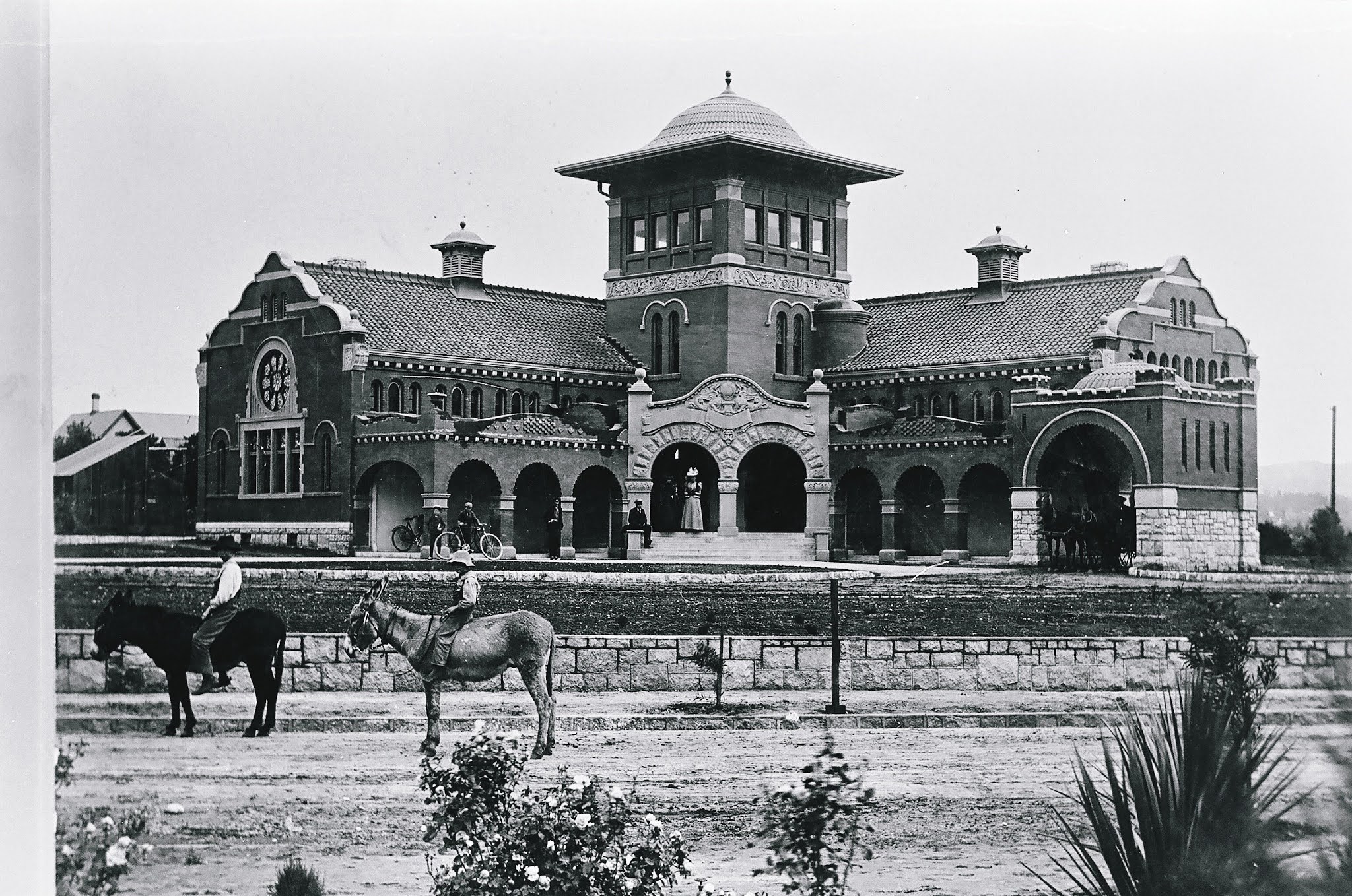
Early image of the A.K. Smiley Public Library [n.d]

The beautiful A.K. Smiley Public Library was dedicated on April 29, 1898. The library's website features the story of the library's founding thanks to the philanthropy of the prosperous Smiley twin brothers, Alfred and Albert. Speakers at the library's dedication included the Mayor (William Fowler), various clergymen and E.G. Judson, a co-founder of Redlands. The Los Angeles Herald noted, "the rooms are admirably arranged for light, ventilation and comfort" and eighty-three electric lamps provided further illumination. According to the National Register of Historic Places Nomination Form, the library was designed in the Moorish Revival Style by Redlands architect T.R. Griffith. [Fun side note- each of the library's wings had full basements, also constructed of hand-cut stone and cement.] Antoinette Humphreys was the librarian in Redlands from 1895-1910.

Alfred & Albert Smiley

Interestingly, the (Los Angeles) Evening Express noted that Los Angeles City Librarian Harriet Child Wadleigh, First Attendant Daisy Austin and William F. Burbank, a member of the Los Angeles Public Library's Board of Directors were also dedication attendees. The article mentioned that Redland's library had adopted the open stacks model, which had been implemented at LAPL by Wadleigh. Just one year later, Burbank would be the one board member who did not want Ms Wadleigh to resign.

Early postcard of A.K. Smiley Public Library published by M(ichael) Rieder
 
The beautiful library was the subject of many souvenir postcards. Additionally, impressive photos can be found from the library itself, as well as California Historical Society via USC Digital Library and the Redlands Area Historical Society. A nifty souvenir plate featuring the library is in the collection of the Museum of Redlands. The library is open and welcoming patrons but if you can't make it be sure to check out the informative virtual 360 degree tour of the library.


Wednesday, April 7, 2021

A Look at the Mobilibraries of the Los Angeles County Library

For National Bookmobile Day (newly dubbed National Library Outreach Day), here is a quick look at the Mobilibraries of the Los Angeles County Library (aka County of Los Angeles Public Library). For a history of the Los Angeles Public Library Traveling Branches click here.

From September 17 through October 3, 1948, Los Angeles County Fairgoers in Pomona got their first glimpse of the Mobilibrary. It was parked right there in front of the race track grandstand on the main thoroughfare and was visited by approximately 1000 people according to the library's staff newsletter. Mobilibrary Unit No. 1 was the first bookmobile of the Los Angeles County Library system and two librarians were there from 2pm to 8pm daily to explain how it would be used. The bookmobile, or mobile unit as the library called it, had been on display for one day, September 9, at the Antelope Valley Fair. Its purpose was to provide service to smaller communities in the Antelope Valley, not including Lancaster and Palmdale which already had library branches.


Los Angeles County Supervisor Roger W. Jessup takes a look at Los Angeles County Library's Mobile Unit No. 1. Note the shelving which was custom built in the "Library Shop" (aka Property and Transportation Division). Photo dated February 8, 1949. Herald Examiner Collection/Los Angeles Public Library Photo Collection

Monday, February 7, 1949 marked the beginning of the Mobilibrary's weekly 600-mile tours of the Antelope Valley. The bookmobile initially carried 1000 books on custom-made shelves. The shelving was the work of James E. Cobb, head of the Library's Property and Transportation Division, and his crew. By mid-1949, a duplicate of Mobilibrary Unit No. 1, this one owned by the Los Angeles County Sheriff's Department, was also pressed into service. This bookmobile, which had one library-appointed driver and librarian, provided service to road camps and forestry camps in remote areas of the county. This bookmobile, later dubbed Wayside Mobilibrary, was housed at Wayside Honor Rancho (now known as Peter J. Pitchess Detention Center).

The end of 1949 saw the start of Mobilibrary Unit No. 2 service to western Los Angeles County--Malibu, Topanga, Cornell, Agoura and Calabasas, which was not already served by branch libraries. The bookmobile--which also provided reference, reader's advisory and accepted requests for any book in the system-- stopped at schools, fire stations, post offices and beaches. Some stops were as short as fifteen minutes while others stretched to three hours. Scheduled stops were adjusted over time based on popularity and use. However, the wear and tear of servicing such large areas weekly necessitated the request for new Mobiliibraries in 1950.

The Los Angeles County Library Antelope Valley Mobilibrary in 1951.
County of Los Angeles Public Library History Collection

Although owned by the Sheriff's Department, an agreement was reached in December 1951 to allow the Wayside Mobilibrary to service the lower Mint Canyon and Bouquet Canyon communities on a trial basis for two days a week. This supplemented the service of the Newhall Branch Library and the Library Stations in the Saugus and Sulphur Spring schools. This route also served Castaic and Val Verde. According to The Newhall Signal at the time, County Librarian John D. Henderson hoped the service would be useful to the communities and that a future budget would allow the library to purchase a bookmobile dedicated to full-time library service in the area. Children made use of the bookmobile but adult circulation was low. Unfortunately the resignation of the librarian in May 1952 meant the temporary suspension of service to this area.

Responding to the rapid growth of the Lakewood area, Mobilibrary Unit No. 4 was added in late 1951 to supplement the small branch library there. The bookmobile was initially housed at Bellflower and would become known as the Los Cerritos Mobilibrary. It was later housed in Norwalk. One fun tidbit about that bookmobile--when the driver/attendant retired after almost sixteen years of working with the Mobilibrary, his younger brother took over as driver/attendant.

One of the Los Angeles County Library's Mobilibraries parked at an unknown location, circa 1954.
County of Los Angeles Public Library History Collection

A new Mobilibrary, with capacity for 1700 books, was added in March 1956. It was broken in by subbing for a Lancaster bookmobile which was in the shop. It would soon make its way to the Malibu route and the (old) Malibu Mobilibrary will take over for the Puente Valley Mobilibrary, which will become a spare bookmobile. Additional mobile units on some routes and replacement vehicles for the bookmobile service were often noted in the staff newsletters. Three $9,000 bookmobiles were ordered in 1957 and arrived in 1958. This meant a second Mobilibrary (aka Newhall Mobilibrary) could be added to the Antelope Valley, which allowed for longer stops, and better service, for the outlying areas. The late 1950s summer schedules of the Newhall Mobilibrary even included brief stops to homes! Second mobilibraries were also added to the East San Gabriel Valley Region (housed at the West Covina Branch) and Malibu.

The East San Gabriel Valley Region Mobilibrary as seen in the Monrovia Daily News-Post, 
October 17, 1958

Housing the bookmobile was a challenge. The first Malibu Mobilibrary is a prime example. It was originally housed in the garage of the driver. When the driver retired it briefly lived at the Las Flores Canyon Fire Station before a Beverly Hills real estate developer allowed the bookmobile to park at a property he had on Malibu Road. That accommodation lasted six months and the Malibu Mobilibrary was moved to the Lennox Branch. One perk to this arrangement was the quicker filling of requests and more varied rotation of stock than at previous housing locations.

At the height of Mobilibrary service there were seven community Mobilibraries and one institutional (Wayside) Mobilibrary that, along with branches, served an area of 3315 square miles (per 1959-60 Los Angeles County Library Annual Report). That is a pretty impressive feat. Today, the Antelope Valley and Santa Clarita (aka Newhall) bookmobiles continue to provide service. A third, known as the Urban Outreach bookmobile, serves areas of Whittier, East Los Angeles, La Puente, Rowland Heights and Azusa. A tip of the hat to Los Angeles County Library bookmobile drivers and librarians, past and present!

Sources: LA County Library staff newsletters and various newspapers including Monrovia Daily News-Post, The Signal (Santa Clarita, CA), The Van Nuys News, Los Angeles Times, The East Whittier Review and more.

Thursday, April 1, 2021

Frank Lloyd Wright's Hollyhock House as a branch of the Los Angeles Public Library?


(Modified) Aline Barnsdall in front of Hollyhock House [n.d] Security Pacific National Bank Collection, Los Angeles Public Library Photo Collection

No joke. It almost happened. Heiress Aline Barnsdall (b. April 1, 1882) gifted part (various sources list the size between 6-10 acres) of Olive Hill, including the Frank Lloyd Wright-designed Barnsdall House (aka Hollyhocks), to the city of Los Angeles. The house was to be used as a public library and the rest of the land would become a municipal park. 


Ms. Barnsdall's gift was given in memory of her oilman father, T.N. Barnsdall, on December 6, 1923. As she explained to the Los Angeles Record, "There must be many people in Los Angeles who want an oasis like this in the desert of jazz. I feel it...should be the property of the people." The park and library departments accepted the gift, pending the city's "legal department" preparing the deed of gift and engineering details.
Artist's Drawing of Barnsdall Olive Hill Donation, Los Angeles Times, February 24, 1924

By late March 1924, the Public Welfare Committee of the City Council was urging the Council to decline Aline Barnsdall's gift, citing too many strings attached. For example, Ms. Barnsdall asked the city to spend $20,000 a year for the property's upkeep. Additionally, no palms or geraniums were to be planted; no war monuments or displays were to be placed on the property; and the library was to keep a fire burning from October to April. Indeed, the city declined the gift but thanked Ms Barnsdall for her offer.


Aline Barnsdall soon found another tenant for the Hollyhock House-- the California Art Club moved in at the end of August 1927 and stayed fifteen years.

Sunday, March 28, 2021

Monica Shannon: Advocate for Libraries, Leprechauns and Luckless Pigwidgeons

You may know Monica Shannon as the author of the 1935 Newbery Award-winning book Dobry, but have you read her fairy tales set in California? They are remarkably descriptive and among the strangest books I’ve read in a long time. We also have her to thank, at least partly, each time we walk through the doors of the Central Library. Women's History Month marks the perfect time to remember Monica Shannon (1889-1965), the library staff member who became a Newbery Award-winning author of whimsical children’s books and, as the person in charge of the early 1920s library bond issue campaigns, played a large role in the construction of Central Library and several branches.

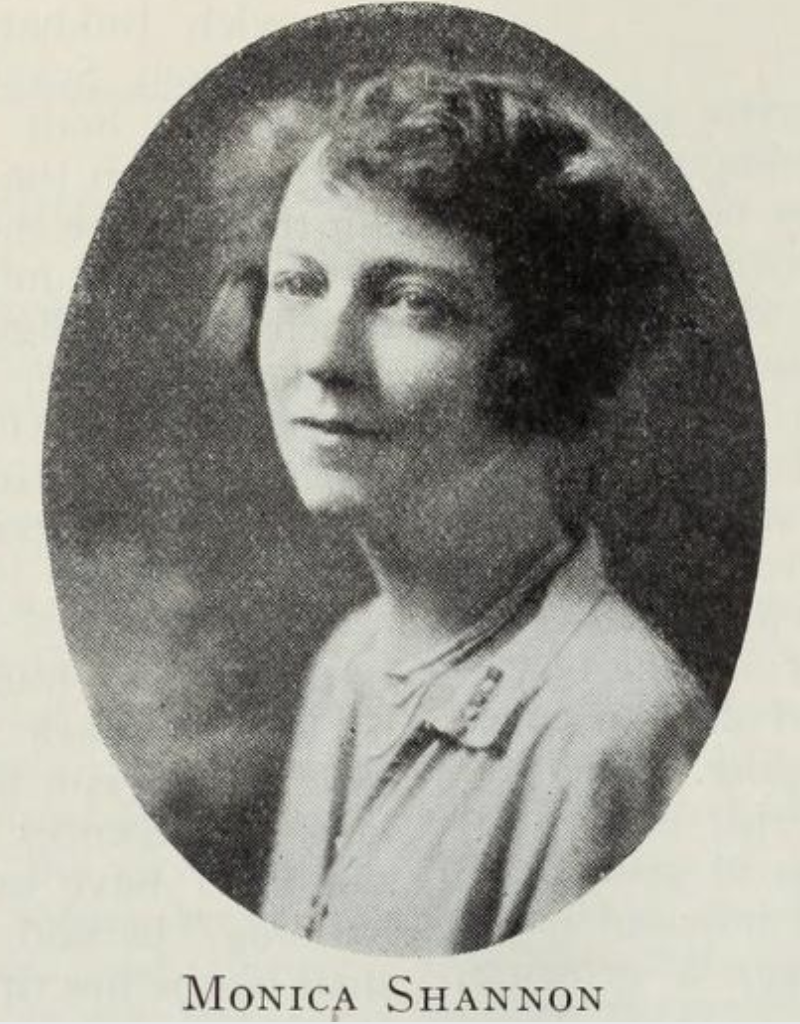
Portrait of Monica Shannon [n.d] Library Journal, January 1, 1930.

Monica Shannon grew up in a household of bibliophiles and storytellers which may have contributed to her choice of librarianship as a profession. She was one of the fourteen graduates from the 1915 class of the Training Class of the Los Angeles Public Library, which prepared attendees for library work. At the time, the library rented three upper floors within the Metropolitan Building at the corner of S. Broadway and W. 5th Street “in the very center of the shopping district.” For the next two years following her graduation, Ms. Shannon worked as an Attendant in the Circulation Department of the library. Something about her, perhaps her work ethic or way with people, propelled her through the ranks. By 1918, according to the library’s annual report, Ms. Shannon was the Attendant-in-Charge of the Science and Industry Department, assisting patrons with reference questions and requests which were often focused on the petroleum industry. She was soon given a new position, one that required excellent organizational and personal skills.

The Metropolitan Building location was quickly being outgrown and City Librarian Everett C. Perry understood the value of sharing the library’s plight with the city. On October 1, 1919 Monica Shannon became responsible for the newly created Department of Publicity. Her first order of business was to educate the public on the benefits of the library and the need for a “suitable central building.” An effort to highlight library departments, locations and services began in earnest in late 1919 within the Los Angeles Public Library Monthly Bulletin, given freely to patrons. Topical articles were written by Ms. Shannon or under her direction. For example, the August 1920 issue centered on the impact of branches and small locations called deposit stations. Meanwhile, another issue chronicled the history of the Los Angeles Public Library from its inception in 1872 until 1920. Thanks to these informative bulletins, Angelenos became better acquainted with the library and its contributions to the city. They more easily understood the importance of having a “Main Library” in a building the library owned that offered a sense of permanence and eliminated rent payments.

Los Angeles Public Library Monthly Bulletin, [March 1921], Google Books.

By 1921, the reasons for the library of Los Angeles to have its own building were many. Los Angeles was one of the fastest growing cities in the United States and, remarkably, the number of library patrons were multiplying quicker than the population. It required an elevator ride, at the Metropolitan Building, to access the library and it wasn’t a particularly large elevator. The library was in a great part of town but it was difficult to get to, the space was crowded and the rent was set to go up by a considerable amount within a few years. Anticipating that it may take quite some time for the approval and construction of a new library, on April 1 the Library Board of Commissioners appealed to the Los Angeles City Council to include a library bond issue on an upcoming ballot. The City Council agreed to place a $2,500,000 bond on the June 7 ballot for a library building and site.

Overcrowding in the library was a problem by 1921. [n.d.] Graham Photo Co./Los Angeles Public Library Institutional Photo Collection
https://tessa.lapl.org/cdm/singleitem/collection/photos/id/96036/rec/8

City Librarian Everett R. Perry, the Board of Library Directors and Monica Shannon (as the Director of Publicity for the Los Angeles Public Library) created a plan for the bond issue drive that was impressive, all the more so when you realize it was just a four week campaign.
Bruggemeyer Memorial Library Dedicated in March 1929

Bruggemeyer Memorial Library in 1940. 

Judge Mancha Bruggemeyer gifted Monterey Park with a library on March 28, 1929. The $40,000 library, at 256 W. Garvey, was complete with automatic heating/cooling and shelves full of donated books.

It was built as a memorial to Bruggemeyer's late wife, (Ro)Berta Pauline Bruggemeyer. A portrait of Mrs. Bruggemeyer by artist Mischa Askenazy was hung in the "memory room" of the library. According to the Los Angeles Times, "objects in memory of Mrs. Bruggemeyer will be placed [in the memorial hall] until such time as the demand for book space shall call for a change of plans."

Monterey Park mayor, Sam B. Jones, accepted the library from Bruggemeyer. The library was, at that time, a branch of the Los Angeles County Library system. County Librarian Helen E. Vogleson and Monterey Park branch librarian, Mrs. Helen Thomas, were also in attendance at the library dedication.

Mrs. Helen Thomas and Mr. Bruggemeyer were married the next month, on April 21, 1929.

Undated photo of Judge Mancha Bruggemeyer
Learn more about the interesting life of Mr. Bruggemeyer here.